Understanding Our Lab Results
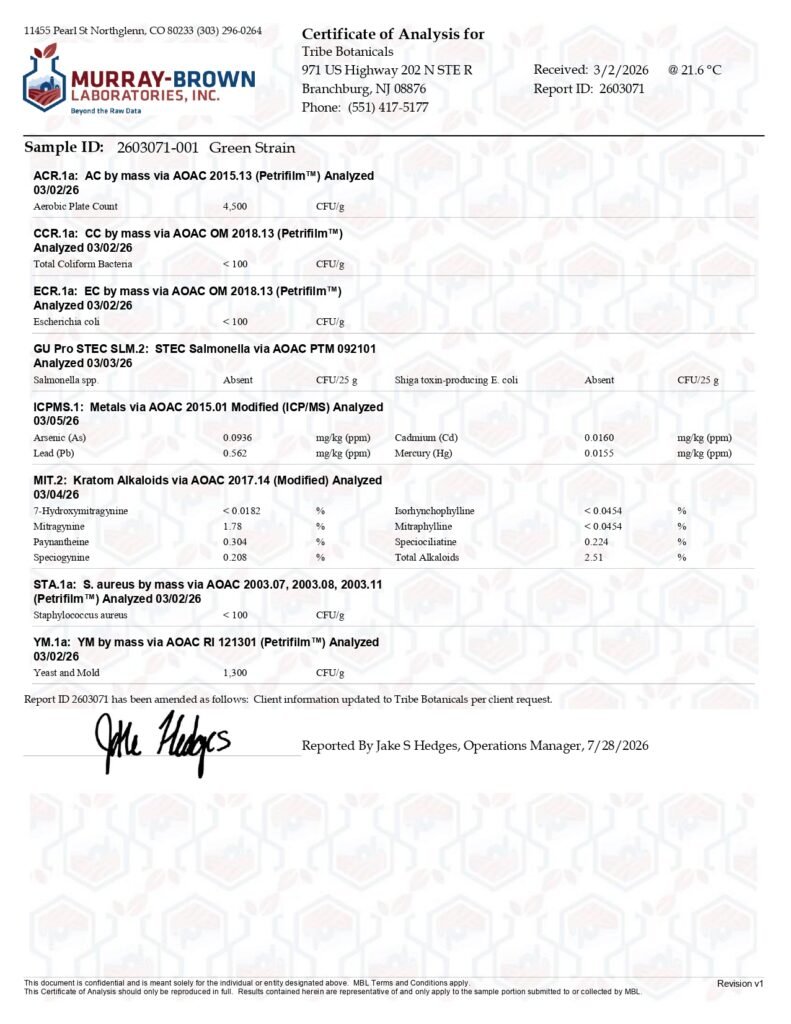
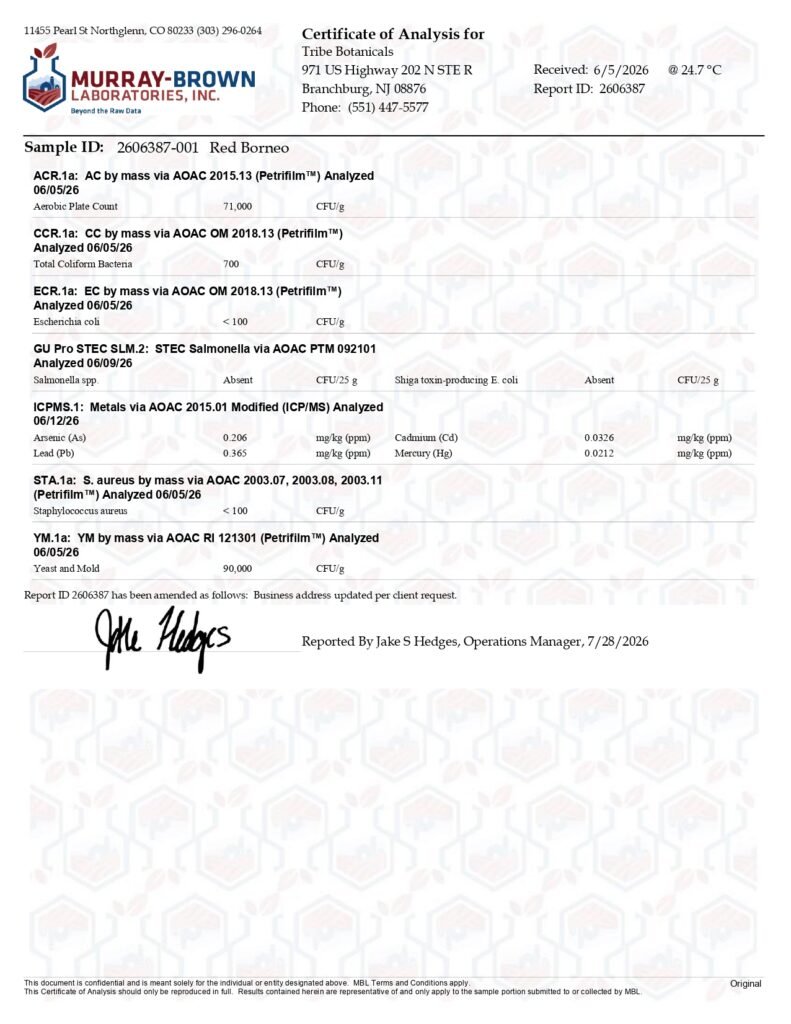
At Tribe Botanicals, every batch is sent to an independent, third-party laboratory before it ever reaches you — and we publish those results so you can see exactly what's in the product you're buying. If a batch doesn't meet the safety limits below, it doesn't get sold. Here's how to make sense of what you're looking at.
What a Certificate of Analysis (COA) Shows
A COA is the lab’s official report on one specific batch. It lists each test, the result, and the method used to measure it. For safety testing, “passing” means the harmful pathogens are completely absent and every other result falls at or below the limits we hold our product to. When you see a result written with a “<” (less than) symbol, it means the substance was below the level the lab’s equipment can even detect — in other words, lower than the number shown.
What We Test For
We screen every batch in three areas:
Pathogens
The dangerous bacteria that should never be present in a product you consume. These must come back completely absent, every time.
Microbial Cleanliness
Everyday bacteria, yeast, and mold that naturally occur on any plant. These aren’t a concern at low levels; the limits keep them well within clean, safe ranges and reflect careful drying and handling.
Heavy Metals
Trace metals like lead and arsenic that plants naturally draw up from soil. Every plant on earth contains tiny amounts; the limits cap them far below any level of concern.
The Limits Every Batch Must Meet
| Test | What it checks | Limit |
|---|---|---|
| Salmonella | Harmful pathogen | Negative / absent |
| Shiga toxin-producing E. coli (STEC) | Harmful pathogen | Negative / absent |
| Aerobic Plate Count (APC) | Overall bacteria level | < 100,000–500,000 CFU/g |
| Yeast & Mold | Mold and yeast level | < 10,000–100,000 CFU/g |
| Coliform | Cleanliness-indicator bacteria | < 2,000–10,000 CFU/g |
| Staphylococcus aureus | Staph bacteria | < 100 CFU/g |
| Arsenic | Heavy metal | < 1.0 mg/kg |
| Cadmium | Heavy metal | < 0.41 mg/kg |
| Lead | Heavy metal | < 1.0 mg/kg |
| Mercury | Heavy metal | < 0.20 mg/kg |
CFU/g = colony-forming units per gram · mg/kg = milligrams per kilogram (ppm)
Our Promise
Every batch you see on our site has cleared this full panel. We test, we publish the results, and if something doesn’t meet these standards, it doesn’t reach you.